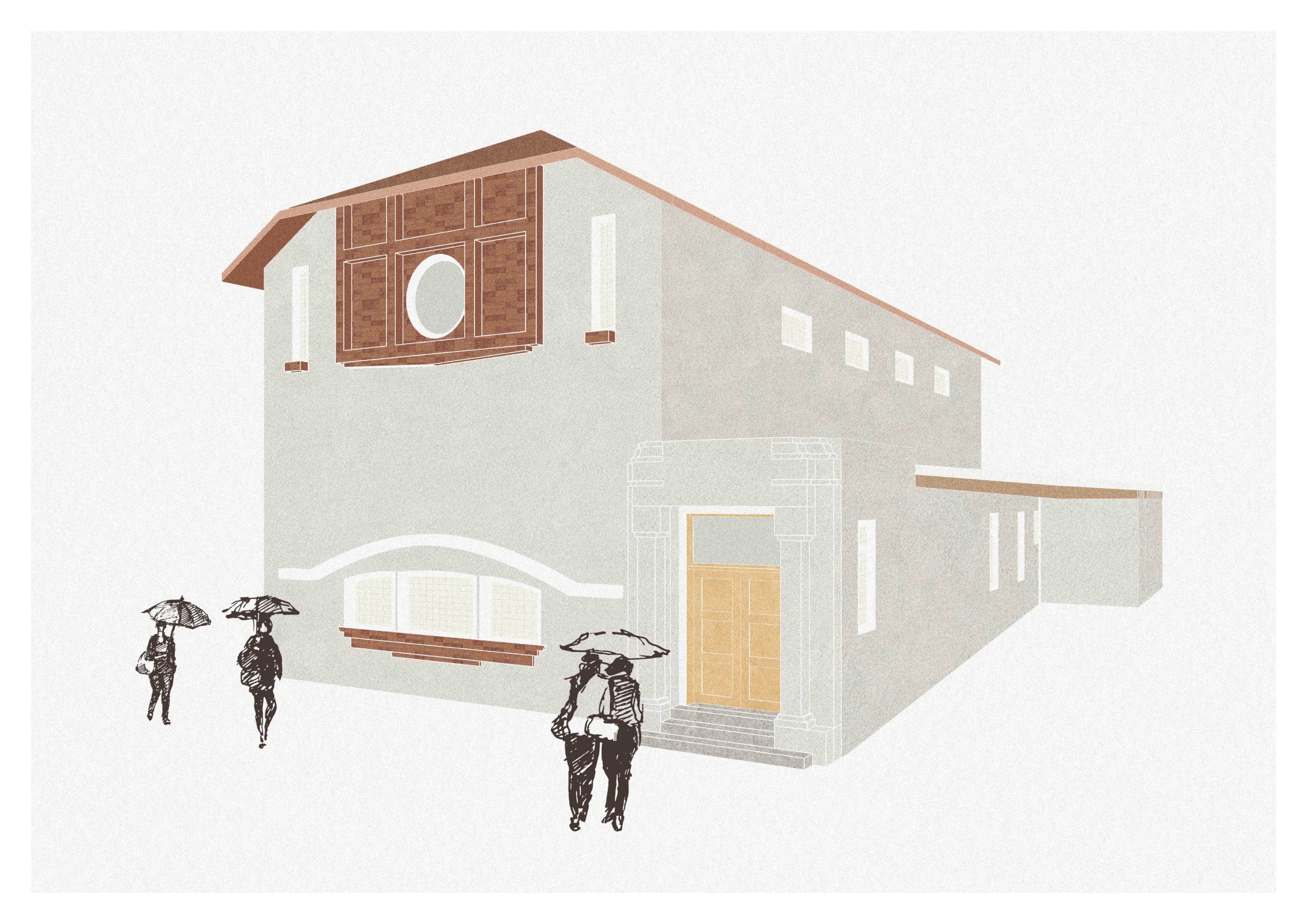
The Island Bay former Masonic Hall, converted into 'The Hermit Club'.
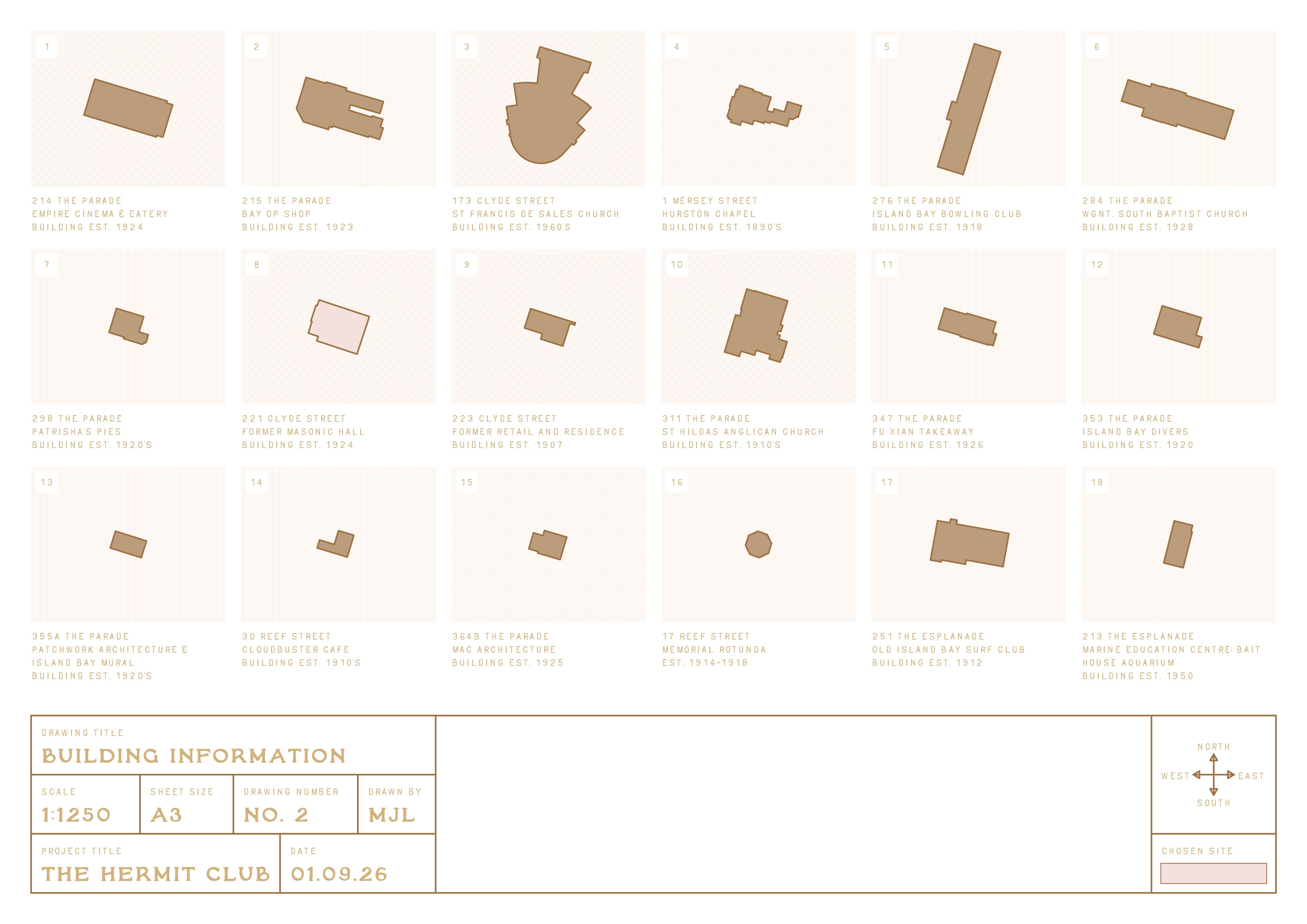
Community infrastructure diagram acting as a key to the Island Bay masterplan, identifying schools, churches, cafés, bars, parks, and other community assets while highlighting those most vulnerable to flooding and extreme weather events.
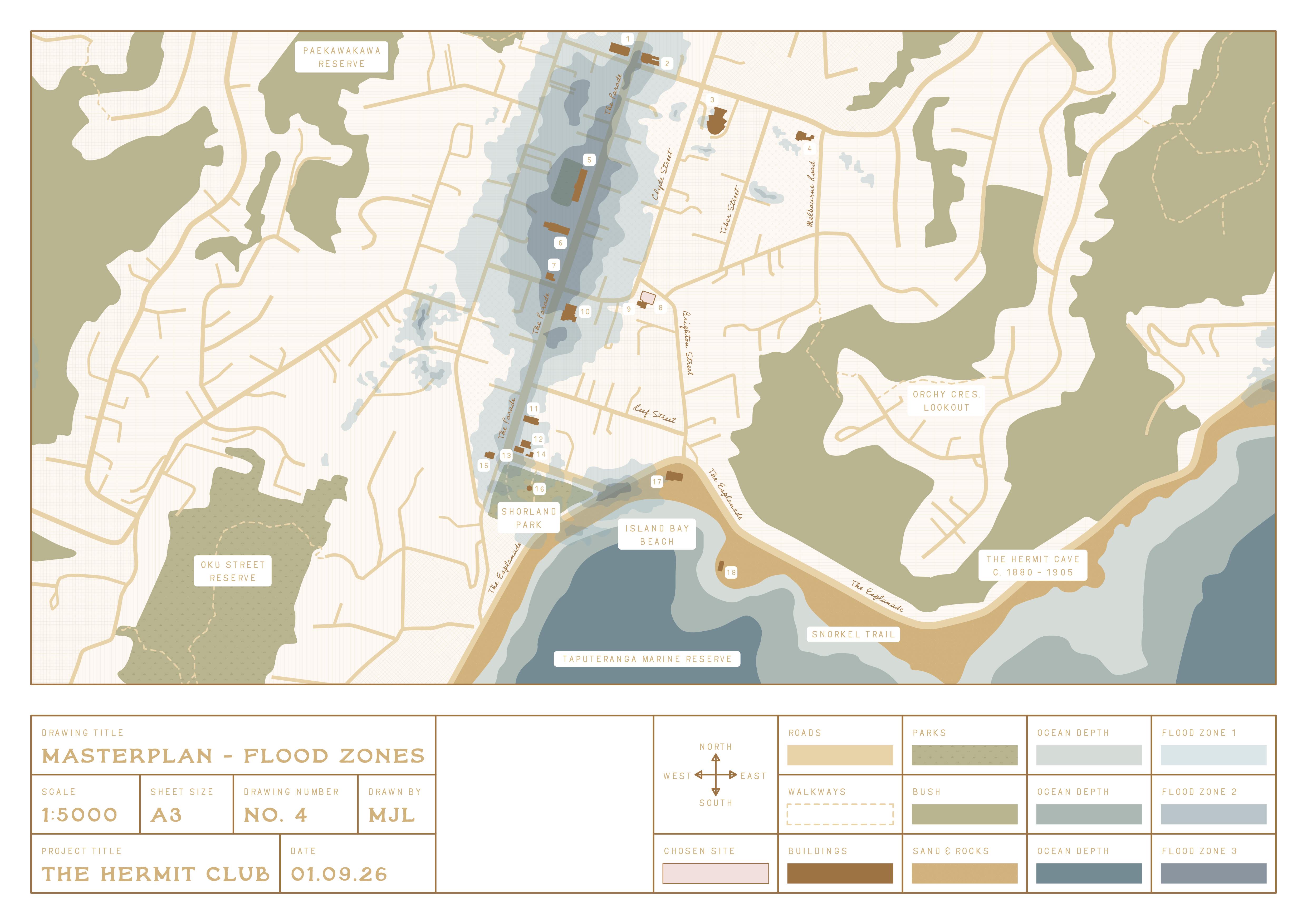
Flooding analysis identifying areas of Island Bay most vulnerable to drainage issues and street flooding, helping to inform strategies for community resilience and adaptation.
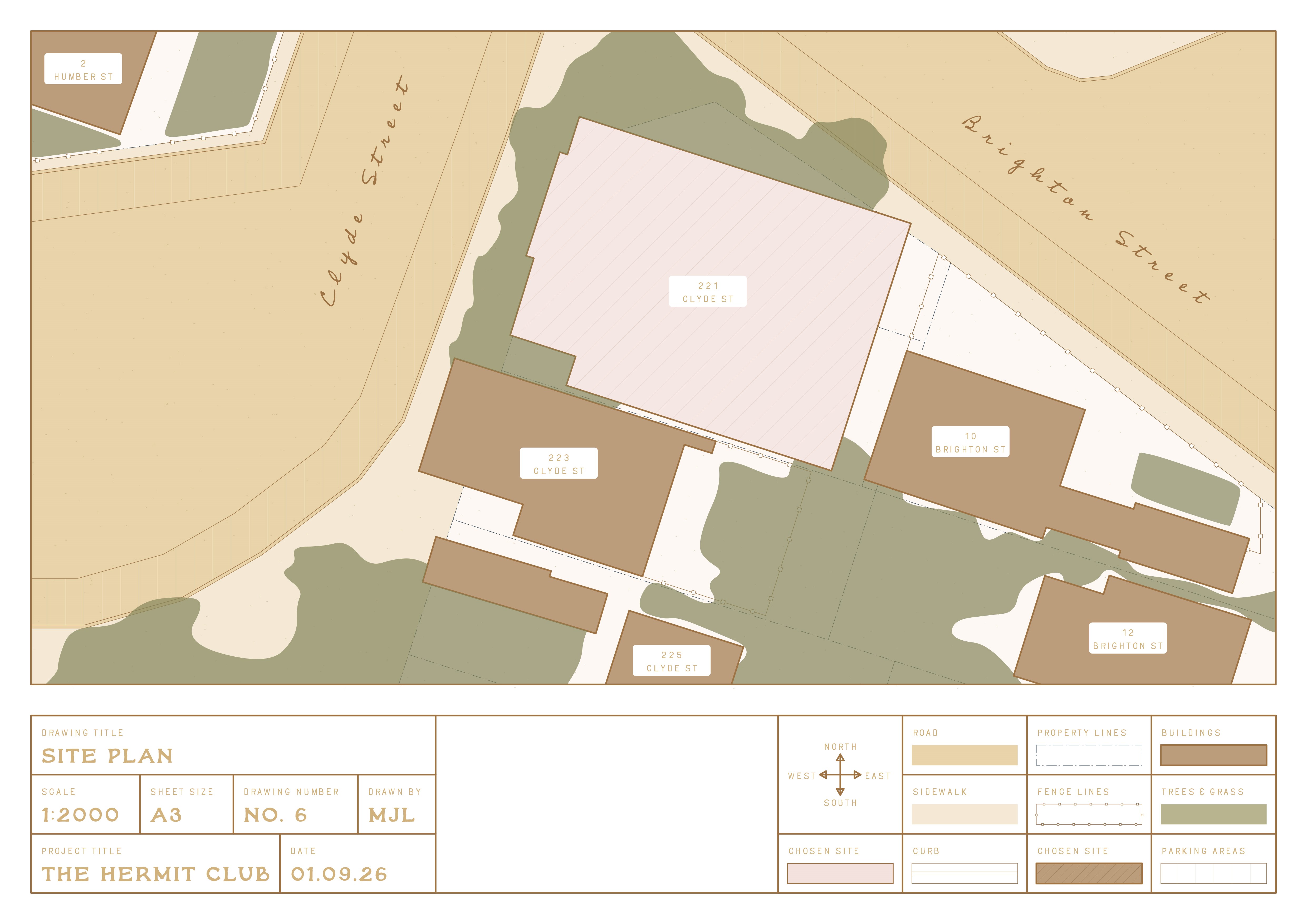
Closer site plan showing how the Masonic Hall sits within Island Bay’s streetscape.
Bachelor of Design
Spatial Design
My project reimagines Island Bay’s Masonic Hall as The Hermit Club, a community venue for potlucks, dances, workshops, game nights, film screenings, and collaborative making. Drawing on the Hermit Cave and the adaptability of hermit crabs, it explores climate resilience and transitional design in response to local drainage issues and recent flooding events. The hall functions as a social hub that can transform into temporary emergency accommodation, enabling residents to remain connected to their neighbourhood during times of disruption.
Adaptable partitions, modular components, and multipurpose joinery allow the hall to shift between activities, inviting the community to actively shape and occupy the space. An upstairs workshop supports sewing, art, craft, repair, and skill-sharing, fostering creativity, self-sufficiency, and community resilience.
The Hermit Club demonstrates how joy, connection, and shared spaces can inform suburban design while highlighting the benefits of smaller homes, collective resources, and stronger community infrastructure.